
Clay County Tax Record Fields
Clay County property tax records live in three places: the PVA assessment roll, the sheriff's collection record, and the County Clerk's delinquency record. Match the parcel number and tax year at each stage.
| Field | What It Shows | Where |
|---|---|---|
| Owner and parcel | January 1 owner and exact PIDN | Clay County PVA |
| Land, building, total | Assessment parts for the stated roll | Clay County PVA |
| Exemption | Deduction actually shown | Clay County PVA |
| Bill and status | Tax year, bill number, amount, payment stage | Sheriff |
| Certificate | Transferred unpaid bill and lien | County Clerk |
Assessed value is not sale price. A Clay County tax bill also reflects exemptions and rates set outside the PVA, which values parcels but sets no rates and collects nothing.
Clay County Assessment Custodian
The Clay County PVA keeps the real-estate roll and the county's parcel maps. It tracks ownership changes and updates building traits. It also values property and administers exemptions. Paul Durham's staff work at 102 Richmond Road, Suite 200, Manchester, weekdays 8:00 to 4:30, reachable at 606-598-3832 or claycountypva@gmail.com. No public parcel-card interface exists. Ask for the current card. Say whether the question is value, exemption, acreage, class, building traits, or ownership date, and request the parcel key, situs and mailing fields, land and improvement values, total assessment, exemption, map reference, sale data, and roll date.
Clay County Assessment Method
Kentucky puts a January 1 valuation date on all property. The Department of Revenue recognizes sales comparison, cost, and income methods. It also requires annual revaluation and a four-year physical inspection cycle. One parcel's traits and method are best confirmed with the PVA. A nearby sale alone tells you little.
Land, building, and total values each stand on their own. Deed consideration might be a true price. It could also be a gift, a nominal sum, an exemption, or a qualified transfer. It is not an appraisal. The Clay County property value page breaks those figures apart in more depth.
See Kentucky Assessment Guidance
The state assessment page matters here. It backs the framework county PVAs use and the evidence concepts that shape a value challenge, and the Kentucky real-property assessment process page spells out the method.
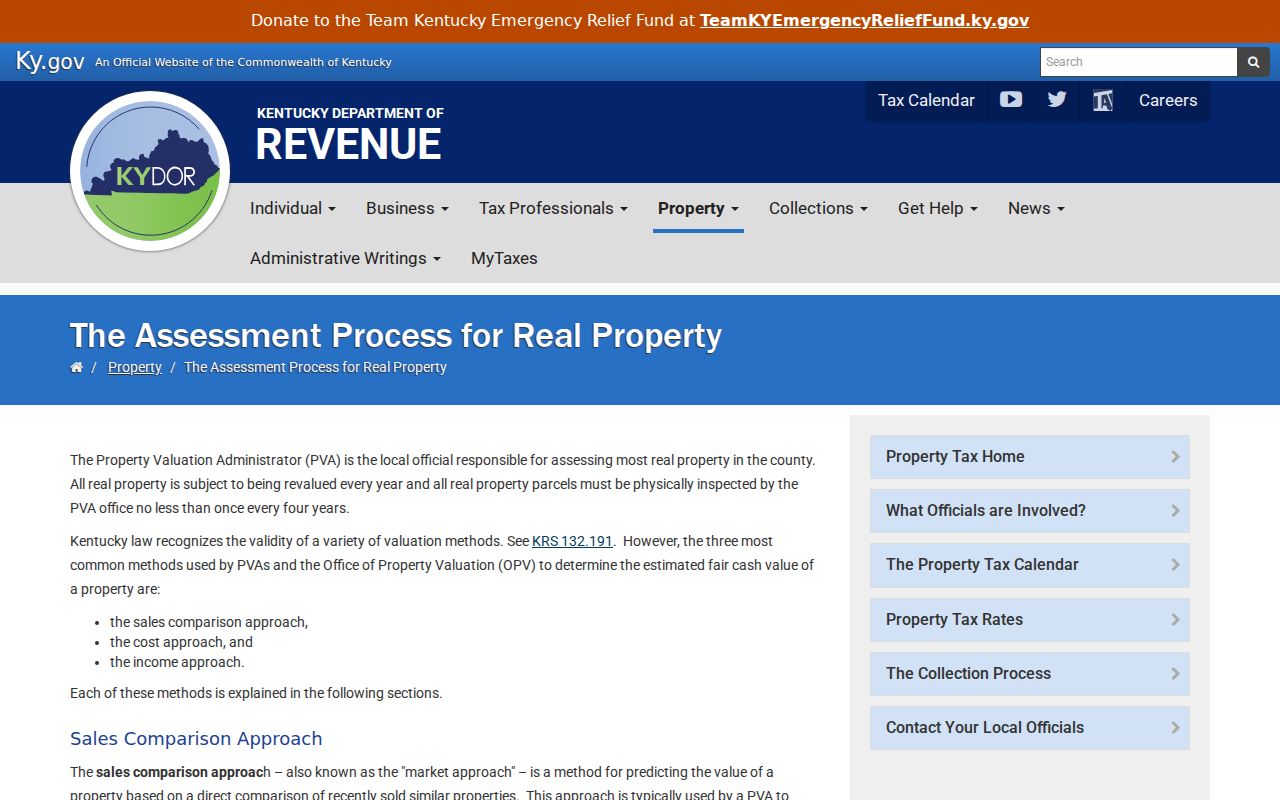
The state page explains method and inspection only. The Clay PVA holds the value.
Look Up a Clay County Tax Bill
The sheriff collects the ordinary annual bills. Delinquent bills later transfer to the County Clerk. Clay County posts no online delinquent list or certificate portal, so follow whichever office held the bill on the date in question.
- Identify the parcel through GIS or the PVA. Preserve punctuation, zeros, and the dated owner field.
- Ask the sheriff for the bill by year, bill number, owner, parcel, and situs address.
- Compare the PVA roll for land, building, total value, and an exemption actually shown.
- If transferred, ask the Clerk for the certificate, notices, payment or purchaser status, and any later release.
- Assessed value
- The value entered on the roll for the stated year.
- Tax rate
- The rate applied by a taxing body, separate from PVA valuation.
- Homestead exemption
- A qualifying deduction that must be confirmed on the parcel.
- Certificate of delinquency
- A transferred unpaid bill that becomes a lien, not immediate ownership.
Follow Clay County Collection Dates
Bills reach sheriffs by September 15 under the Kentucky DOR collection process. The discount window runs to November 1. Face amount applies through December 31. Delinquency adds five percent from January 1, then ten percent plus a sheriff add-on after January 31, so confirm each tax year.
Delinquent bills transfer to the Clerk April 15. Certificates become liens. A third-party purchaser gets a certificate interest, not immediate fee title, so redemption, enforcement, foreclosure, and a final deed need separate proof.
Note: Keep the tax year and official annual notice with every Clay County property tax conclusion because dates and charges can change.
Read Clay County Tax Notice Fields
A 2024 Clay County sheriff notice offers a field sample, not a current bill. It named Sheriff Patrick Robinson. Bills became payable November 1. The notice listed 102 Richmond Road, Suite 100, Manchester, required the bill number, and allowed check or money-order payment with no cards. Posted hours ran weekdays 8:00 to 4:00.
Capture the year, bill number, assessment owner, mailing or in-care-of name, parcel, situs and legal description, face and delinquent amounts, notice date, payment route, certificate status, and any later release. A notice is not a complete county tax database.
Clay County January 1 Owner
The DOR calendar makes the January 1 owner responsible for that year's bill. Payment can shift only through a private contract. A later buyer may appear in an in-care-of mailing field. The Clerk points to August 1, 2008. Kentucky deeds have required that tax-bill address field since then.
That timing explains the mismatch. Clay County property tax records can name one owner while a later deed names another grantee. Compare the tax year, PVA roll date, recording date, and GIS refresh. Preserve each source's label and date.
Check Clay County Exemptions
The PVA administers exemptions in Clay County. DOR lists a homestead deduction of $49,100 for 2025 and 2026, subject to eligibility and change. Apply it only when the parcel record shows it or the PVA confirms it. A prior owner's status is not proof. Neither is age, use, or a mailing address. Ask for the gross assessment, exemption type and sum, taxable assessment, roll year, and any status record the office keeps. Share personal facts sparingly.
See Clay County Tax Collection
The state's collection page matters here. It shows the handoff that moves a current bill into delinquency and points to the office that should answer a status request on any date. The Kentucky property-tax collection process page has the details.
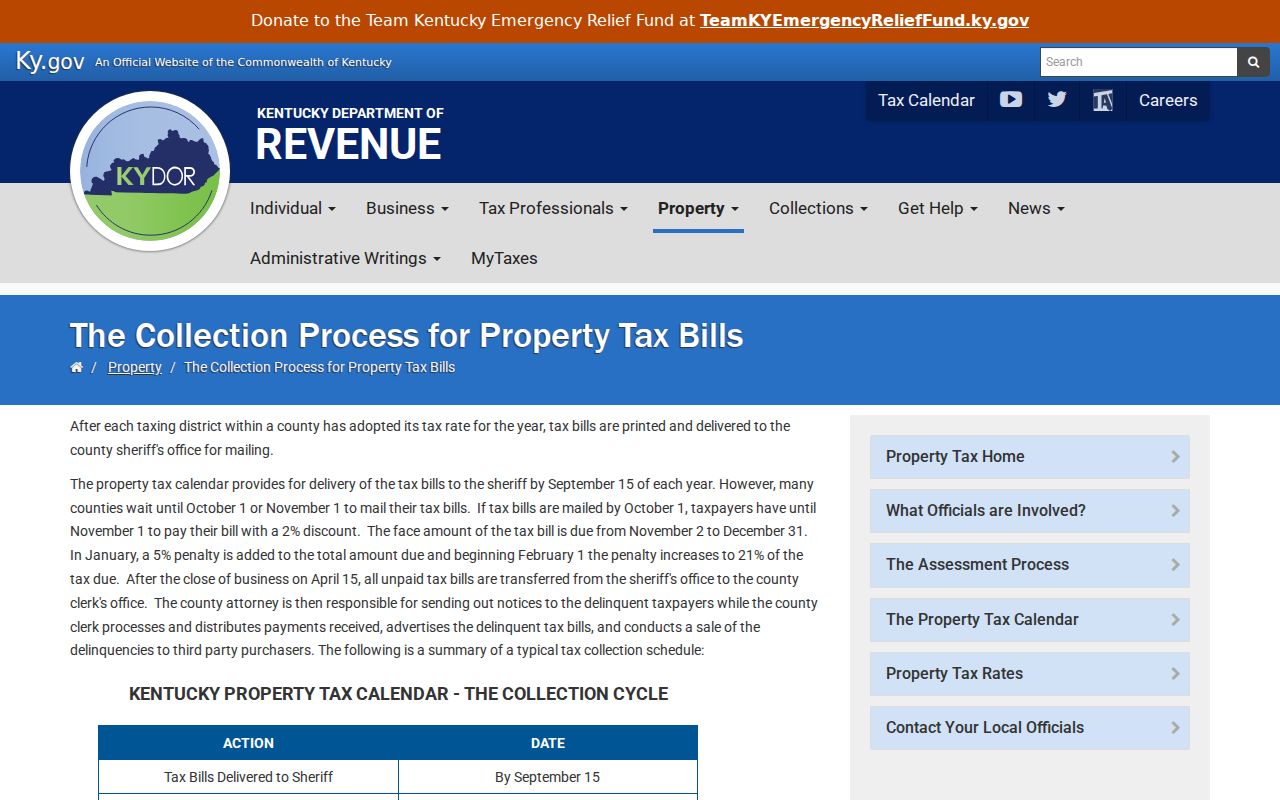
The state guidance sets the sequence. A Clay County status answer still comes from the sheriff or Clerk record for the named parcel and tax year.
Reconcile Clay County Tax Sources
Make any Clay County tax conclusion reproducible. Write down the PVA parcel key and roll year. Record the sheriff bill number and response date. Note any Clerk certificate or release reference too. When owner names differ, keep each name apart. Save the January 1 assessment owner, the later deed grantee, and any in-care-of recipient in separate fields. Never merge them into a guessed current owner.
Delinquent matters need careful sorting. Separate the face tax from added interest, sheriff charges, Clerk fees, and attorney fees. Track installment status, sale notice, purchaser, redemption, court enforcement, and the recorded outcome as distinct facts. DOR allows interest and added fees. A quoted balance must still come from the office that issued the bill. A list entry or certificate sale alone never proves title moved.
Keep a status log for every Clay County property tax records inquiry. Quote the office's exact wording, name the staff or document source, and note the date obtained. Save the bill, notice, certificate, payment proof, release, or court filing behind each stage. If a split or merge changed the parcel number, ask the PVA for both the prior and successor keys. Match older tax years or certificates only after that. Then test the deed legal description and recorded plat. See whether the tax item covers all or part of the land.
Watch the addresses. A mailing address can differ from the situs. An in-care-of entry may hint at delivery timing. It proves no new owner. It cannot erase the January 1 owner of record. Match names through dated deeds and assessment rolls, not addresses alone.
Road, water, or infrastructure news can lead to public records. It still proves nothing about an assessment or parcel value. Use a county project name only to locate contracts, rights-of-way, easements, or improvement records. Those records must be tied to the land.
Preserve Clay County Tax Evidence
Preserve the evidence itself. Save the query, access date, office response, tax year, parcel ID, bill number, and the exact status wording. Each document has one job. A paid bill proves payment, not clean title. An assessment card reports the roll, not a current sale opinion. A certificate reports a lien stage, not ownership. Keeping every item in its own role prevents false conclusions.
Court involvement adds a step. Search by case number and parties, then request the Clay Circuit Court Clerk record. After judgment or sale, return to the County Clerk deed records for a commissioner deed, tax deed, release, or other filed outcome. Public notices help you find those recordings. They never replace them.
Appeal a Clay County Assessment
Kentucky starts with a PVA conference. If that fails, a three-member local board of assessment appeals can review the matter. Bring facts. A recent appraisal works. So do comparable sales, photos, and repair estimates. Add income facts when relevant, or errors in acreage and building traits. Local dates follow the annual calendar.
Identify the parcel, tax year, protested value, requested value, and factual basis. Comparable sales persuade best when location, use, size, condition, and sale timing are explained. Date every photo. Tie each repair estimate to a defect and the valuation date. The local board issues a certified decision. It belongs with the evidence and later review papers.
Keep the full paper trail. That includes the conference request, evidence delivery, PVA response, board action, and certified decision. A payment dispute and a valuation appeal are different tasks. Paying or contesting a bill never silently fixes parcel acreage or deed title. The Kentucky appeal guidance confirms the PVA conference, local board, and factual-evidence route.
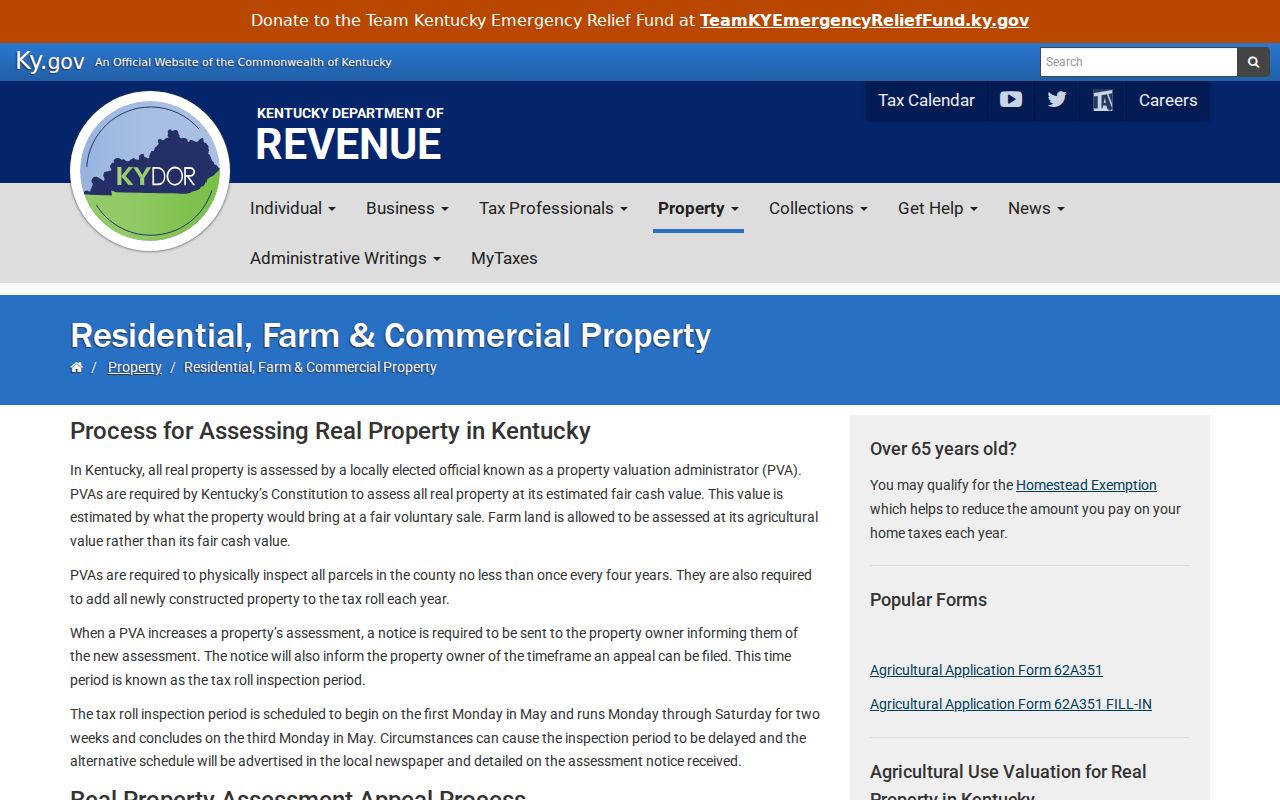
The state page documents the appeal sequence. Clay County supplies the local calendar and parcel record.
Appeal window. Contact the Clay County PVA for the current conference period and board dates. Never reuse a prior year's deadline.